


For families
Choosing educational support that fits your child
A practical starting point for comparing provision, asking useful questions and keeping the learner at the centre.
Read article →Home / Insights
Ideas for learning. Practical next steps.
Thoughtful articles for parents, schools and local authorities exploring personalised education, confidence and future pathways.
38 articles to explore
Featured insight · Transitions
Moving into a new setting takes preparation, shared responsibilities and a plan that the learner can understand.
Read the article →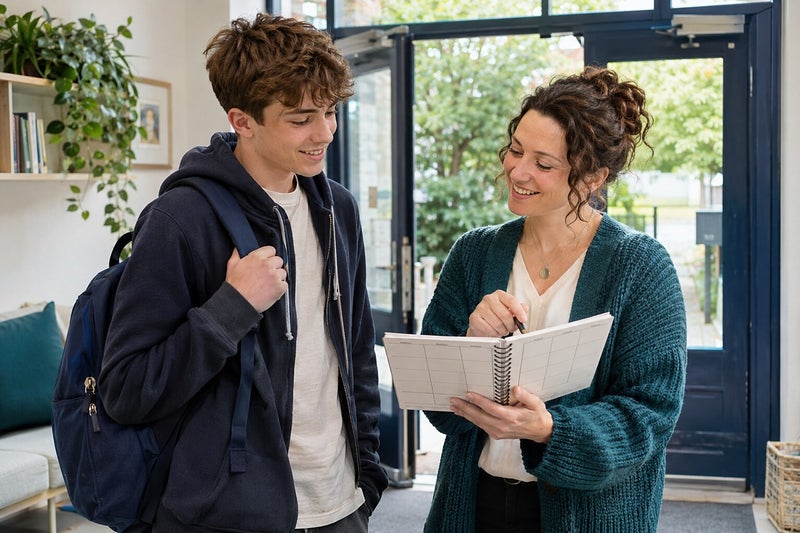
Images are illustrative learning scenes, not photographs of Reconnect learners or sessions.
For families
A practical starting point for comparing provision, asking useful questions and keeping the learner at the centre.
Read article →
Learning and confidence
Rebuilding trust can make it easier for a learner to participate, ask questions and show what they understand.
Read article →
Online learning
A useful online session combines preparation, active participation and a clear understanding of what the learner is working towards.
Read article →
Learning and confidence
Learning evidence becomes more useful when it shows what a learner understands, how they participated and what should happen next.
Read article →
Future pathways
Vocational tasters can help learners ask better questions about a subject, role or pathway before making their next decision.
Read article →
For families
A good review brings together evidence, different perspectives and clear actions without losing sight of the learner.
Read article →
Future pathways
A meaningful project can bring communication, organisation, number skills and decision-making into the same learning experience.
Read article →
Alternative Provision
Prepare a useful alternative provision referral with learner strengths, support history, safeguarding contacts and clear outcomes for the next placement.
Read article →
Alternative Provision
Plan the first month of alternative provision with a calm introduction, useful baselines, a manageable timetable and a review of what the learner needs.
Read article →
Alternative Provision
Create useful alternative provision reports with clear delivery records, outcome-linked evidence, unresolved barriers and decisions for the commissioner.
Read article →
Alternative Provision
Use a focused alternative provision placement review agenda to check safety, education, learner views and decisions, with clear responsibility for actions.
Read article →
SEND & EHCP
Help young people influence their education through choices, visuals, writing and trusted adults when a formal meeting or spoken conversation is difficult.
Read article →
Tuition
Know what to ask before home tuition begins, including tutor checks, session arrangements, professional boundaries and how to raise a safeguarding concern.
Read article →
Alternative Provision
Use the voluntary national standards for non-school alternative provision to ask practical questions about safeguarding, education, staffing and oversight.
Read article →
Attendance
Make a shared school and alternative provision timetable clearer by agreeing session responsibilities, attendance reporting, travel and escalation routes.
Read article →
Attendance
Explore the questions families and schools should ask about a part-time timetable, including purpose, learning access, safeguarding and regular review.
Read article →
EBSNA
Review a stalled return-to-school plan by checking barriers, adjustments, learner feedback and the next manageable step without treating setbacks as failure.
Read article →
Attendance
Prepare for a school attendance meeting with a clear record of barriers, your child's views, useful questions and a written plan for agreed support.
Read article →
Attendance
Plan a supportive secondary-school transition after disrupted primary education, from sharing useful information to practising routines and reviewing support.
Read article →
SEND & EHCP
Review noise, lighting, seating, movement and transitions with the learner to identify practical changes that may make an education setting more accessible.
Read article →
SEND & EHCP
Support task initiation with clear first steps, worked examples, short checklists and planned reviews, while building independence rather than dependence.
Read article →
SEND & EHCP
Make reading tasks more accessible through clearer layout, vocabulary preparation and suitable formats while keeping the learning goal challenging and clear.
Read article →
SEND & EHCP
Help learners follow instructions with clear language, visual steps, modelling and time to respond, then check understanding without putting them on the spot.
Read article →
SEND & EHCP
Explore practical educational support while assessments are pending, including recording needs, trying adjustments and reviewing progress with school staff.
Read article →
SEND & EHCP
Connect EHCP outcomes with clear weekly learning targets, practical teaching activities and evidence of progress without changing the provision in the plan.
Read article →
SEND & EHCP
Choose clear work samples and progress records for an EHCP annual review, showing starting points, support provided, learner views and remaining barriers.
Read article →
Attendance
Understand the conversations that help education continue during health-related absence, including school contact, suitable learning and coordinated reviews.
Read article →
GCSE & Functional Skills
Plan GCSE catch-up after disrupted education by checking the exam specification, identifying priority gaps and building a realistic sequence of learning.
Read article →
GCSE & Functional Skills
Discuss exam access arrangements early with the exam centre, including everyday support, relevant evidence and the rules for the learner's qualification.
Read article →
GCSE & Functional Skills
Use a practical checklist when contacting an exam centre about private GCSE entry, fees, assessment components, access arrangements and important deadlines.
Read article →
GCSE & Functional Skills
Connect Functional Skills maths with useful tasks such as comparing prices, reading timetables and measuring, while matching practice to the learner's level.
Read article →
GCSE & Functional Skills
Practise Functional Skills English through useful reading, writing and discussion tasks, with a clear purpose and feedback matched to the learner's level.
Read article →
Tuition
Find a useful learning starting point through conversation, work samples and short teaching tasks, while keeping assessment accessible and purposeful.
Read article →
Tuition
Prepare for live online tuition with a check of devices, accessibility, safe communication, session routines and a practical plan if the connection fails.
Read article →
Tuition
Keep useful learning support consistent when a tutor or setting changes by sharing strengths, successful approaches, current work and a clear transition plan.
Read article →
Alternative Provision
Prepare for a post-16 move from alternative provision with course checks, careers guidance, access arrangements, travel planning and a supported handover.
Read article →
Alternative Provision
Connect alternative provision evidence with a looked-after child's Personal Education Plan, keeping the young person's views, learning and next steps central.
Read article →Explore a service or talk to our team.