

Reading & communication
Decoding, vocabulary, comprehension and discussion, with texts and tasks chosen around the learner.
Primary learning · KS1–KS2
Personalised primary teaching that connects reading, writing and maths with the child’s interests, confidence and current skills. A clear starting point, carefully chosen activities and encouragement to keep trying.
Discuss the right support →Ask a question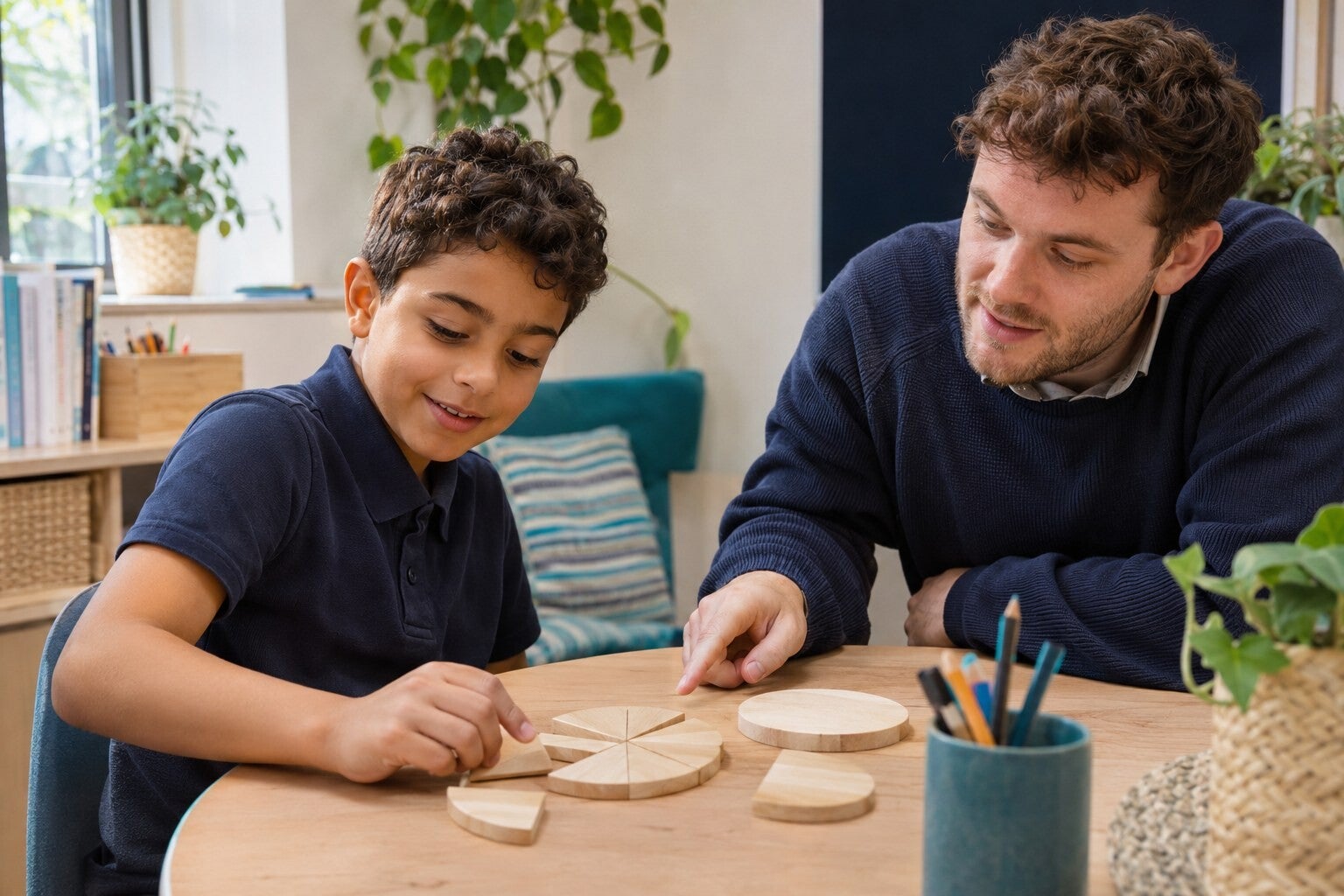
A purposeful programme
We look at what the child understands now, where gaps are getting in the way and what helps them participate. Teaching can revisit foundations or build new skills without relying on age alone to set the pace.
Decoding, vocabulary, comprehension and discussion, with texts and tasks chosen around the learner.
Build sentences, express ideas and practise spelling through manageable, meaningful activities.
Develop number understanding and problem-solving using explanations, practical resources and practice.
An example in practice
Planning a small garden could bring together reading instructions, measuring a space and writing a short explanation. The activity has a clear learning goal, with support adjusted as the child works. Activities are adapted individually.
CORE SUBJECTS · KS1–KS2
English and maths priorities are chosen from the child's starting point. Science can provide practical opportunities to read, measure, describe and ask questions, with specific topics agreed as part of the learning plan.
KS1 examples: phonics and decoding, listening, retelling stories and writing simple sentences. KS2 examples: comprehension and inference, vocabulary, spelling, punctuation and organising writing for a clear purpose.
KS1 examples: counting, place value, addition and subtraction, simple shapes and measures. KS2 examples: multiplication and division, fractions and decimals, measurement, data and explaining how a problem was solved.
KS1 examples: observe plants and animals, explore everyday materials and notice seasonal change. KS2 examples: investigate habitats, forces or changes of state, make predictions and record observations in words, tables or simple graphs.
These examples show how learning can develop across the primary years. Topics and pace are selected individually, rather than assuming every child follows the same sequence or covers every topic.
Clarity before provision starts
KS1 and KS2 priorities in English and maths, linked to assessed starting points and agreed curriculum goals.
One-to-one attention, accessible resources, predictable routines and adjustments informed by the child’s needs.
Primary support focuses on knowledge, confidence and progression. Any school assessment arrangements remain a separate discussion with the school.
From enquiry to review
The programme, session arrangements and review approach are agreed before provision begins. An enquiry is the start of a suitability discussion.
Share current learning, school information, interests and any relevant support plans.
Agree teaching goals, delivery arrangements and what successful progress would look like.
Use learning examples and feedback to decide whether to consolidate, extend or adapt.
Safety underpins the plan. Safeguarding contacts, relevant information, adult responsibilities and safe delivery arrangements are discussed before support starts. Safer recruitment and professional boundaries matter throughout.
Safeguarding & policies →Tell us about the current education, support needs and what you would like to change. Suitability, availability and arrangements are confirmed individually.
Discuss a referral →