Published by Reconnect Learning
An Education, Health and Care Plan, often called an EHCP, can feel confusing for many parents at first. If your child has additional needs and requires support beyond what is normally available in school, an EHCP may help identify those needs and set out the provision required.
This guide explains what an EHCP is, who it is for, what it should include and how it can support a child or young person’s education.
What Is an EHCP?
An EHCP is a legal document for children and young people aged 0 to 25 who have special educational needs and require additional support.
It sets out:
- A child or young person’s educational needs
- Health needs linked to education
- Social care needs where relevant
- The support required to meet those needs
- The outcomes the child or young person is working towards
- The educational placement or type of provision required
Who Might Need an EHCP?
An EHCP may be considered when a child’s needs cannot be fully met through ordinary school support alone.
This may include children and young people with:
- Autism Spectrum Condition
- ADHD
- Speech, language and communication needs
- Social, emotional and mental health needs
- Learning difficulties
- Sensory needs
- Physical disabilities
- Medical needs affecting education
- Complex or multiple needs
What Support Can an EHCP Provide?
The support within an EHCP should be specific to the child’s individual needs. It should explain what support will be provided, how often it will be delivered and who is responsible for delivering it.
Support may include:
- Specialist teaching
- One-to-one support
- Speech and language therapy
- Occupational therapy
- Social, emotional and mental health support
- Adapted learning resources
- Alternative provision
- Home tuition
- Online learning
- EOTAS provision where appropriate
What Are EHCP Outcomes?
EHCP outcomes describe what the child or young person is working towards. These should be meaningful, realistic and focused on helping the child make progress.
Outcomes may relate to:
- Learning and academic progress
- Communication
- Independence
- Social interaction
- Emotional wellbeing
- Attendance and engagement
- Preparation for adulthood
How Is an EHCP Requested?
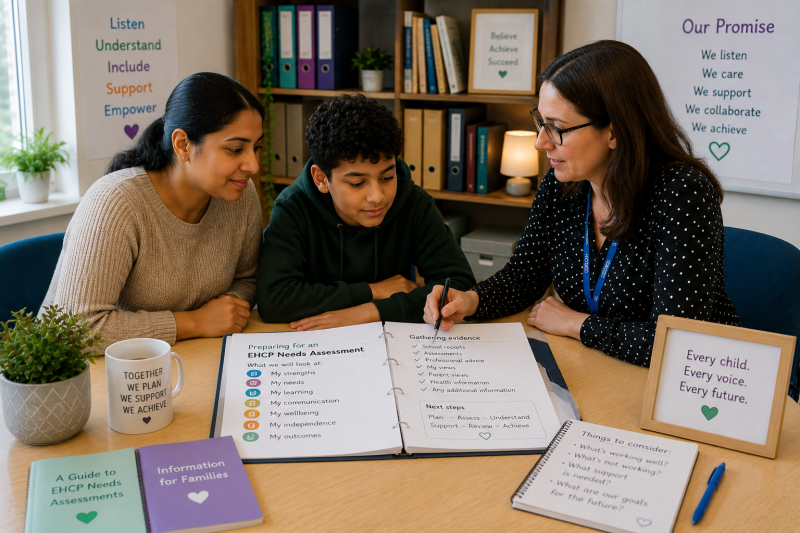
A parent, carer, school or young person can request an Education, Health and Care Needs Assessment from the Local Authority.
The Local Authority will then consider whether an assessment is needed. Evidence may be gathered from parents, schools, educational psychologists, health professionals and other relevant services.
What Happens After an EHCP Assessment?
Following the assessment, the Local Authority decides whether to issue an EHCP. If an EHCP is issued, it should clearly set out the child’s needs, outcomes and provision.
Parents have the opportunity to review the draft EHCP and request amendments before the final plan is issued.
Can an EHCP Include Alternative Provision?
Yes, in some cases an EHCP may include alternative provision, home tuition, online learning or Education Otherwise Than At School where this is considered suitable and necessary for the child’s needs.
This is particularly relevant where a child is unable to access mainstream education due to SEND, anxiety, medical needs or emotionally based school non-attendance.
What Is Section F of an EHCP?
Section F is one of the most important sections of an EHCP because it sets out the special educational provision required to meet the child’s needs.
Provision in Section F should be clear, specific and detailed. It should not be vague. Parents may wish to check whether support is described clearly enough to be delivered and monitored.
How Often Is an EHCP Reviewed?
An EHCP must be reviewed at least once every 12 months through an annual review.
Reviews should consider:
- Whether the child’s needs have changed
- Whether current provision is working
- Progress towards outcomes
- Any changes needed to support education and wellbeing
What If My Child Cannot Attend School?
If a child with an EHCP is unable to attend school, it is important to explore why and what support may be needed.
Difficulties may be linked to:
- EBSNA
- Anxiety
- Autism
- SEMH needs
- Medical needs
- Trauma
- Unmet needs within the current placement
In some circumstances, alternative provision, home tuition, online learning or EOTAS may be considered.
How Reconnect Learning Can Support EHCP Learners
Reconnect Learning provides flexible education support for children and young people with SEND, EHCPs and barriers to mainstream education.
Our support may include:
- SEND support
- EHCP-focused provision
- Alternative provision
- Home tuition
- Online learning
- EBSNA support
- Attendance support
- Mentoring
- Functional Skills and GCSE support
- Reintegration support
Every Child Deserves the Right Support
EHCPs can play a vital role in ensuring children and young people receive the support they need to access education and make progress.
When provision is personalised, clear and child-centred, it can help learners feel safer, more confident and more able to engage with learning.
Need EHCP Support?
If your child has an EHCP, is awaiting assessment, or is struggling to access education, Reconnect Learning can help you explore suitable support options.
Call: 01708 918728
Email: info@reconnectlearning.co.uk
Add comment
Comments