Published by Reconnect Learning
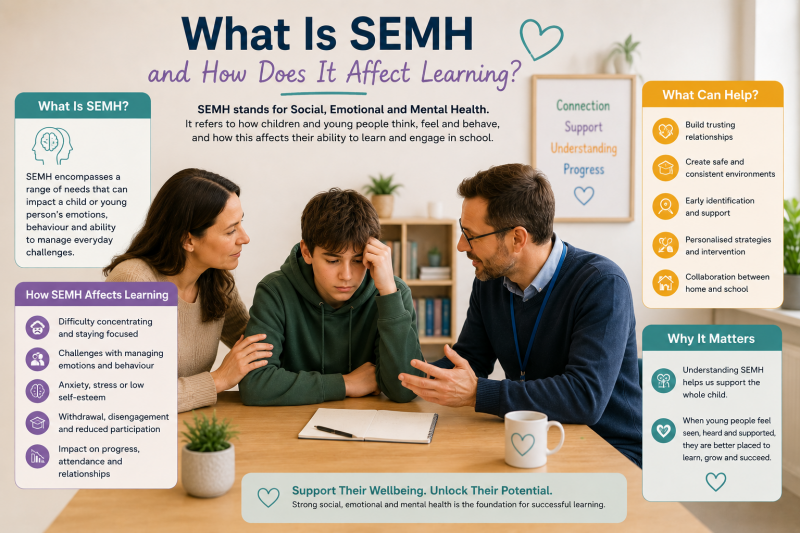
SEMH stands for Social, Emotional and Mental Health. It is one of the four broad areas of need identified within the SEND Code of Practice and can have a significant impact on a child's education, wellbeing and ability to engage in learning.
Children and young people with SEMH needs may experience difficulties managing emotions, building relationships, regulating behaviour or coping with the demands of education.
What Does SEMH Mean?
SEMH refers to a range of social, emotional and mental health difficulties that affect how a child thinks, feels and interacts with the world around them.
SEMH needs can vary significantly from one learner to another. Some young people may appear withdrawn and anxious, while others may display frustration, emotional outbursts or difficulties managing behaviour.
Common SEMH Difficulties
Children with SEMH needs may experience:
- Anxiety
- Low self-esteem
- Emotional dysregulation
- Depression or low mood
- Attachment difficulties
- Trauma-related challenges
- Difficulty building relationships
- Behavioural difficulties
- School avoidance
- EBSNA
How Can SEMH Affect Learning?
Learning is closely connected to emotional wellbeing.
When a child feels anxious, overwhelmed or emotionally distressed, it can become much harder to focus, retain information and engage positively in education.
SEMH needs may affect:
- Attendance
- Concentration
- Motivation
- Memory
- Relationships with peers
- Relationships with adults
- Confidence in learning
- Academic progress
Signs a Child May Have SEMH Needs
Every child is different, but some common signs may include:
- Frequent emotional outbursts
- Persistent anxiety
- Withdrawal from activities
- Avoidance of school
- Difficulty managing friendships
- Low confidence
- Changes in mood
- Reduced attendance
- Difficulty coping with change
What Causes SEMH Difficulties?
There is rarely a single cause.
SEMH needs may be linked to:
- Trauma
- Adverse childhood experiences
- Bereavement
- Anxiety disorders
- Neurodiversity such as Autism or ADHD
- Bullying
- Family difficulties
- Medical conditions
- Unmet educational needs
Why Relationships Matter
For many learners with SEMH needs, positive relationships are the foundation for success.
Trusting relationships with adults can help children feel safe, understood and supported, making it easier for them to engage in learning and personal development.
Supporting Learners with SEMH Needs
Effective SEMH support often focuses on understanding the reasons behind behaviour rather than simply responding to the behaviour itself.
Support may include:
- Mentoring
- Pastoral support
- Emotional wellbeing programmes
- Attendance support
- Alternative Provision
- Home Tuition
- Online Learning
- SEND Support
- Reintegration programmes
The Importance of Early Intervention
Identifying SEMH needs early can help prevent difficulties from escalating and ensure children receive the support they need as soon as possible.
Early intervention can improve attendance, wellbeing, engagement and educational outcomes.
How Reconnect Learning Supports Learners with SEMH Needs
Reconnect Learning provides personalised educational support for children and young people experiencing SEMH difficulties, EBSNA, SEND needs and barriers to mainstream education.
Our programmes focus on:
- Building confidence
- Supporting emotional wellbeing
- Developing positive relationships
- Improving attendance
- Reducing barriers to learning
- Creating personalised educational pathways
Every Child Deserves to Be Understood
SEMH needs do not define a child's future.
With the right support, understanding and opportunities, children and young people can develop resilience, confidence and the skills they need to succeed.
Need Support?
If your child is experiencing social, emotional or mental health difficulties that are affecting education, Reconnect Learning can help.
Call: 01708 918728
Email: info@reconnectlearning.co.uk
Together, we can help your child reconnect with confidence, wellbeing and learning.
Add comment
Comments