Published by Reconnect Learning
Every autistic child is unique. While many autistic children thrive within education, others may experience challenges that affect learning, attendance, social interaction and emotional wellbeing.
Understanding autism and recognising individual needs is key to creating positive educational experiences and helping young people reach their potential.
What Is Autism?
Autism, or Autism Spectrum Condition (ASC), is a neurodevelopmental difference that affects how a person experiences and interacts with the world around them.
Autistic children may experience differences in communication, social interaction, sensory processing and flexibility of thinking. These differences vary greatly from one individual to another.
Autism is not an illness and does not need to be "fixed". Many autistic individuals have significant strengths, talents and unique ways of thinking.
How Can Autism Affect Education?
School environments can be challenging for some autistic learners.
Difficulties may arise due to:
- Sensory sensitivities
- Busy and noisy environments
- Changes in routine
- Social communication challenges
- Anxiety
- Unclear expectations
- Difficulty processing information
- Emotional regulation challenges
These difficulties can affect engagement, attendance and confidence if appropriate support is not in place.
Common Strengths of Autistic Learners
Autistic children often have many strengths that should be recognised and celebrated.
- Attention to detail
- Strong memory skills
- Creative thinking
- Honesty and integrity
- Deep interests and passions
- Problem-solving abilities
- Strong focus on preferred subjects
Educational support should build upon these strengths while helping learners manage challenges.
Understanding Sensory Needs
Many autistic children experience sensory differences.
A classroom that feels manageable for one child may feel overwhelming for another due to:
- Noise levels
- Bright lighting
- Crowded environments
- Unexpected changes
- Strong smells
- Physical proximity to others
Recognising sensory needs can significantly improve a child's educational experience.
Autism and School Anxiety
Many autistic learners experience heightened levels of anxiety.
This may be linked to sensory challenges, social expectations, uncertainty, previous experiences or difficulties coping with change.
For some children, anxiety can contribute to reduced attendance or Emotionally Based School Non-Attendance (EBSNA).
Supporting Autistic Learners Effectively
There is no one-size-fits-all approach. Effective support should be personalised and responsive to individual needs.
Helpful strategies may include:
- Clear routines and structure
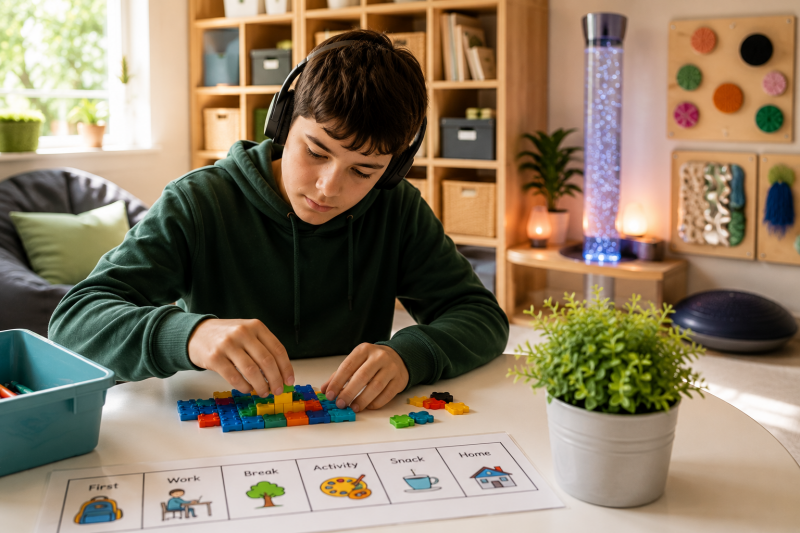
- Visual supports
- Predictable expectations
- Reduced sensory demands
- Positive relationships
- Flexible learning approaches
- Opportunities for movement breaks
- Personalised support plans
The Importance of Relationships
Trusting relationships are often central to successful educational outcomes.
When autistic learners feel understood, accepted and supported, they are more likely to engage positively with learning and develop confidence.
What If School Is Becoming Difficult?
Some autistic children may experience increasing difficulties attending or engaging with school despite support being in place.
Where this happens, families may wish to explore additional educational pathways such as:
- Alternative Provision
- Home Tuition
- Online Learning
- EOTAS
- SEND Support Programmes
- Mentoring
- Reintegration Support
How Reconnect Learning Supports Autistic Learners
Reconnect Learning provides flexible, personalised educational support for autistic children and young people.
Our support includes:
- SEND Support
- EHCP Support
- Alternative Provision
- Home Tuition
- Online Learning
- EBSNA Support
- Attendance Support
- Mentoring
- Functional Skills and GCSE Support
- Reintegration Programmes
Celebrating Differences
Autistic children have unique strengths, talents and perspectives that enrich our communities.
With understanding, appropriate support and opportunities to succeed, autistic learners can thrive both educationally and personally.
Need Support?
If your child is autistic and experiencing difficulties with education, attendance or wellbeing, Reconnect Learning would be happy to help.
Call: 01708 918728
Email: info@reconnectlearning.co.uk
Together, we can help create a learning pathway that works for your child.
Add comment
Comments